
Where did tattoos originate? Historians cannot identify one confirmed birthplace for tattooing. Some of the earliest surviving examples appear on Ötzi, the Alpine mummy, and on ancient Egyptian bodies. Those remains show that people practiced tattooing more than 5,000 years ago. However, they do not identify the first tattoo artist or prove where the practice began. Other communities developed distinctive traditions across Asia, the Americas, and the Pacific. To understand tattoo history, separate three questions: where evidence survives, how cultures used tattoos, and where the English word originated.
Where Did Tattoos Originate? What We Know
Finding an ancient tattoo tells researchers that someone practiced tattooing at a particular place and time. It does not reveal when that community first learned the technique. Skin usually decays after death, so most ancient tattoos leave no visible trace. Ice and dry conditions sometimes preserve bodies, giving archaeologists rare opportunities to examine their markings. Consequently, the archaeological record favors places where those conditions occurred. Tools offer another source of evidence, but their identification requires care.
A sharp point could serve several purposes, so researchers also examine wear patterns and pigment residues. Together, these clues help establish a minimum age for tattooing in a region. They do not provide a complete map of its beginnings. Therefore, naming one country as the inventor goes beyond the available evidence. Ancient communities may have developed tattooing independently, shared techniques through contact, or experienced both processes. The surviving record cannot resolve every connection.
Ötzi And The Earliest Surviving Tattoos
In 1991, hikers found a naturally preserved body in the Alps near the border between Italy and Austria. Researchers determined that the man, now known as Ötzi, lived more than 5,300 years ago. His skin carries 61 tattoos, mainly groups of lines and crosses rather than recognizable pictures. These markings provide direct evidence of tattooing during the Copper Age. However, the number of marks does not tell us how many appointments he had or who created them. Their purpose also remains uncertain.
Researchers have considered therapeutic explanations because some tattoos lie near areas of physical wear. That interpretation remains a possibility, not proof that tattooing relieved his pain. Cultural or symbolic meanings could also have mattered. For readers tracing tattoo origins, Ötzi provides a remarkable surviving example rather than an identifiable starting point. He shows that people already knew how to make lasting skin markings thousands of years before modern studios existed.
Ancient Egypt And Early Picture Tattoos
Ancient Egypt adds another important piece to the story. In research published in 2018, British Museum researchers and colleagues described tattoos on two naturally mummified people from Gebelein. Both lived more than 5,000 years ago, around the same broad period as Ötzi. Infrared imaging revealed details that ordinary viewing had missed. The man’s arm carried animal figures, including a wild bull and a Barbary sheep. Meanwhile, the woman’s tattoos included S-shaped and linear designs.
The animal images rank among the earliest known surviving figurative tattoos, meaning designs that depict recognizable subjects. That distinction matters because Ötzi’s markings mainly consist of geometric forms. The Egyptian findings also showed that both men and women wore tattoos in that society. However, researchers cannot assign a certain meaning to every image. An animal might suggest strength or another association, but its appearance alone cannot settle the question. These discoveries expand the evidence without proving that Egypt invented tattooing.
Early Traditions In Asia And The Americas
Evidence from other regions shows how varied ancient tattooing became. In the Altai region of Inner Asia, frozen burials preserved tattoos from the Pazyryk culture. Some designs show elaborate animals rather than simple lines. A 2025 study used detailed infrared imaging to investigate tattoos on a woman who lived over 2,000 years ago. The researchers identified differences in workmanship that suggest different artists or changes in one artist’s experience. Such findings present ancient tattooing as a skilled craft, not merely a collection of rough marks.
In North America, researchers identified a roughly 2,000-year-old tattooing tool from what is now southeastern Utah. Ancestral Pueblo people made it with a wooden handle and cactus spines. Pigment residues and experimental comparisons helped researchers assess its purpose. This evidence also places tattooing in the region long before European colonization. However, one tool cannot represent every Indigenous community or explain every tradition. Each discovery belongs to a particular cultural setting, with its own questions and limits.
Polynesian Tattoos And Community Identity
Polynesian tattooing holds an important place in the history of body art, but Polynesia does not represent one uniform tradition. Different communities developed their own designs, techniques, and expectations. In Sāmoa, tatau can express cultural identity, personal commitment, and relationships within a community. The pe‘a traditionally covers much of the male wearer’s lower body, while the malu follows a different arrangement for women. These forms involve more than selecting an attractive pattern from a reference sheet. Artists work within established design structures while bringing their own knowledge and decisions to the details.
The Museum of New Zealand Te Papa’s account of Sāmoan tatau explains these relationships between markings, identity, and social life. Importantly, this history does not depend on European visitors recognizing the practice. Local communities already held the knowledge and gave the artwork meaning. Their perspectives therefore deserve attention when discussing tattoo history or considering designs inspired by Pacific traditions.
The Distinct History Of Māori Tā Moko
Māori tā moko developed in Aotearoa New Zealand from tattooing traditions that ancestors brought from Eastern Polynesia. Over time, Māori practitioners developed distinctive tools, methods, and visual forms. Traditional facial work included techniques that created grooves as well as pigment markings. However, reducing tā moko to its physical technique misses its cultural significance. Te Papa describes a visual language involving artistic skill, identity, and a person’s role. This history also includes disruption through colonization and the influence of missionaries.
Later generations have worked to maintain and revitalize the practice, with support and knowledge sharing from other Pacific communities. Therefore, tā moko belongs to a living history rather than a finished chapter in a museum. When learning about it, prioritize explanations from Māori practitioners and cultural institutions. Avoid assuming that an online chart can translate every line into a fixed meaning. A design’s significance depends on more than its appearance in isolation.
Where The Word Tattoo Came From
The question “where did tattoos originate?” differs from asking where the English word began. The English word “tattoo” comes from the Tahitian word “tatau.” Accounts associated with James Cook’s first Pacific voyage helped introduce the term to English-speaking readers in the eighteenth century. However, Cook did not invent tattooing or discover it on behalf of the communities already practicing it. His voyage belongs to the history of European encounters with Pacific cultures, not the beginning of body art. This distinction also helps explain why sailors appear so often in popular tattoo histories.
Maritime travel contributed to exchanges of designs and practices, while sailors developed associations between tattoos and their journeys. An anchor or ship could connect artwork with experience at sea. Nevertheless, maritime traditions represent one part of a much larger history. A familiar English name should not overshadow the older practices and local terms that existed elsewhere.
How Electric Machines Changed Tattooing
Modern equipment marks a technological change, not the invention of tattoos themselves. In 1891, Samuel O’Reilly received a United States patent for an electric tattooing machine. His invention adapted ideas from Thomas Edison’s earlier electric pen, which originally helped create document stencils. The change gave tattooists a powered method for moving needles rather than relying entirely on hand-driven techniques. Later inventors and artists continued modifying equipment for their work.
However, the machine did not erase the importance of drawing, placement, or an artist’s judgment. Nor did it make older tattoo traditions disappear. Distinguishing equipment history from cultural history prevents a common misunderstanding: a modern tool does not create the art form’s original starting date. When reviewing a tattoo portfolio, consider the artist’s handling of lines, shapes, and composition. Equipment forms part of the process, but the finished artwork reflects many decisions that a machine cannot make on its own.
Using Tattoo History To Guide Your Own Design
History can inform a tattoo without turning someone else’s cultural identity into decoration. Start by identifying what attracts you to a reference. You might appreciate its use of repeated shapes, its placement, or the way it balances dark and open areas. Those preferences offer a starting point for an original design conversation. However, pause before copying a specific cultural marking or assigning it a meaning from an image caption. Ask who uses that design and whether its significance depends on personal or community connections.
During a tattoo consultation, explain your interests and the questions your research raised. An honest discussion may lead toward a different reference or a more personal composition. Also, separate appreciation for ancient art from claims about your own ancestry. You can value a tradition without presenting it as yours. Thoughtful research helps you describe what you want while respecting the people behind the inspiration.
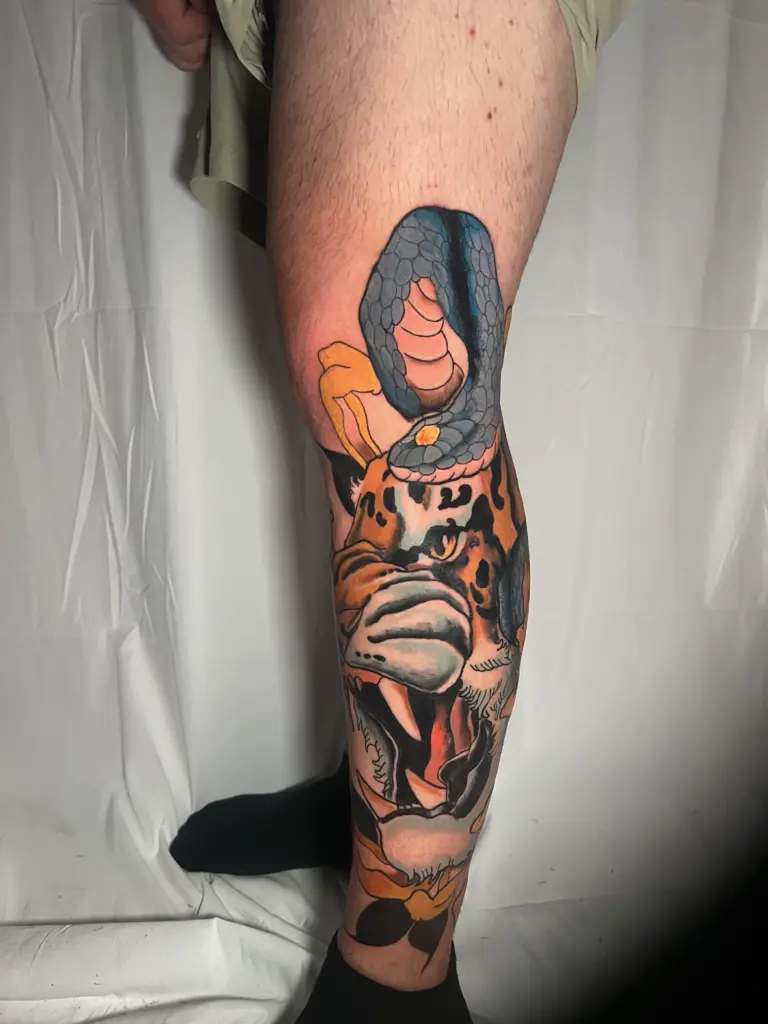
A Worldwide History Behind Your Next Tattoo
So, where did tattoos originate? The evidence supports an ancient, geographically varied history, not one confirmed birthplace. Preserved bodies reveal practices from thousands of years ago, while tools and living traditions add different perspectives. The origin of the English word tells another story entirely. Keeping those distinctions clear makes the history more accurate and more interesting.
For your own tattoo, bring that curiosity into the design process. Constant Pressure Tattoo Co. in Melbourne, Florida, offers consultations and custom tattoo work. Gather references, explain what appeals to you, and discuss how the artwork could fit your chosen placement. You do not need to imitate an ancient design to appreciate tattooing’s long history. The next step is choosing a piece that reflects your intentions today.